Road Labels
Summary
Google Maps’ road labeling code base had not been meaningfully updated in years, resulting in inconsistent behavior, unpredictable zoom-level transitions, and reduced wayfinding clarity. As part of a broader effort I led to create a UX strategy for the road labeling product area, I led the redesign of the road labels’ information architecture (IA), which allows users to see the most relevant labels at each zoom level with progressive disclosure from shallow to deep zoom levels. This improved IA makes the map behave more naturally and predictable, increasing users’ ability to wayfind and orient.
Timeline
Feb - Apr 2024
Launched Aug 2024
Role
Lead UX Designer, UX Research Contributor (Google FTE)
Contribution
As the sole UX designer, I initiated this workstream by establishing a deep understanding of technical constraints, user pain points, and global map behaviors.
I began with foundational UX research, including a literature review and expert interviews across partner teams (engineering, product, and UX ) to map out technical feasibility and gather early product improvement ideas. I then conducted a comprehensive heuristic evaluation spanning cities, suburbs, and rural regions globally, documenting over 20 pages of UX issues and opportunities. This artifact became a central reference point for both engineering and UX partners.
Partnering closely with PM and engineering, I facilitated prioritization and scoping of the highest-impact improvements derived from research insights. I then drove iterative IA prototyping with my engineering counterpart: they produced functional demos, and I evaluated them against emerging UX principles, user mental models for map reading, and alignment with our design system. Through rapid cycles of critique and refinement, we converged on a unified IA solution that balanced UX quality with performance and metric considerations.
Impact
The new Road Labels IA launched in August 2024 across all Google Maps clients (mobile, web, car experiences, etc.), reaching X.X billion users. Launch metrics show improvements in user satisfaction, spatial orientation and efficiency in locating places on the map, indicating clearer wayfinding and more intuitive map behavior.
User Problem #1: Difficulty Finding Road Labels
The launched solution makes it easier for users to see important road labels by:
Stopping flickering labels as the user zooms in
Allowing higher relevance road labels to show up instead of lower relevance places
User Problem #2: Lack of Progressive Disclosure
The launched solution improves the progressive disclosure of road labels
Updated minimum zoom levels at which road labels appear for 4 of the 8 categories of roads
Ensures the most important roads' labels render first (at shallower zoom levels)
Aligns closer with Google Maps design guidelines around zoom level hierarchy to ensure we are showing users relevant content
Scaling the New IA Across Surfaces
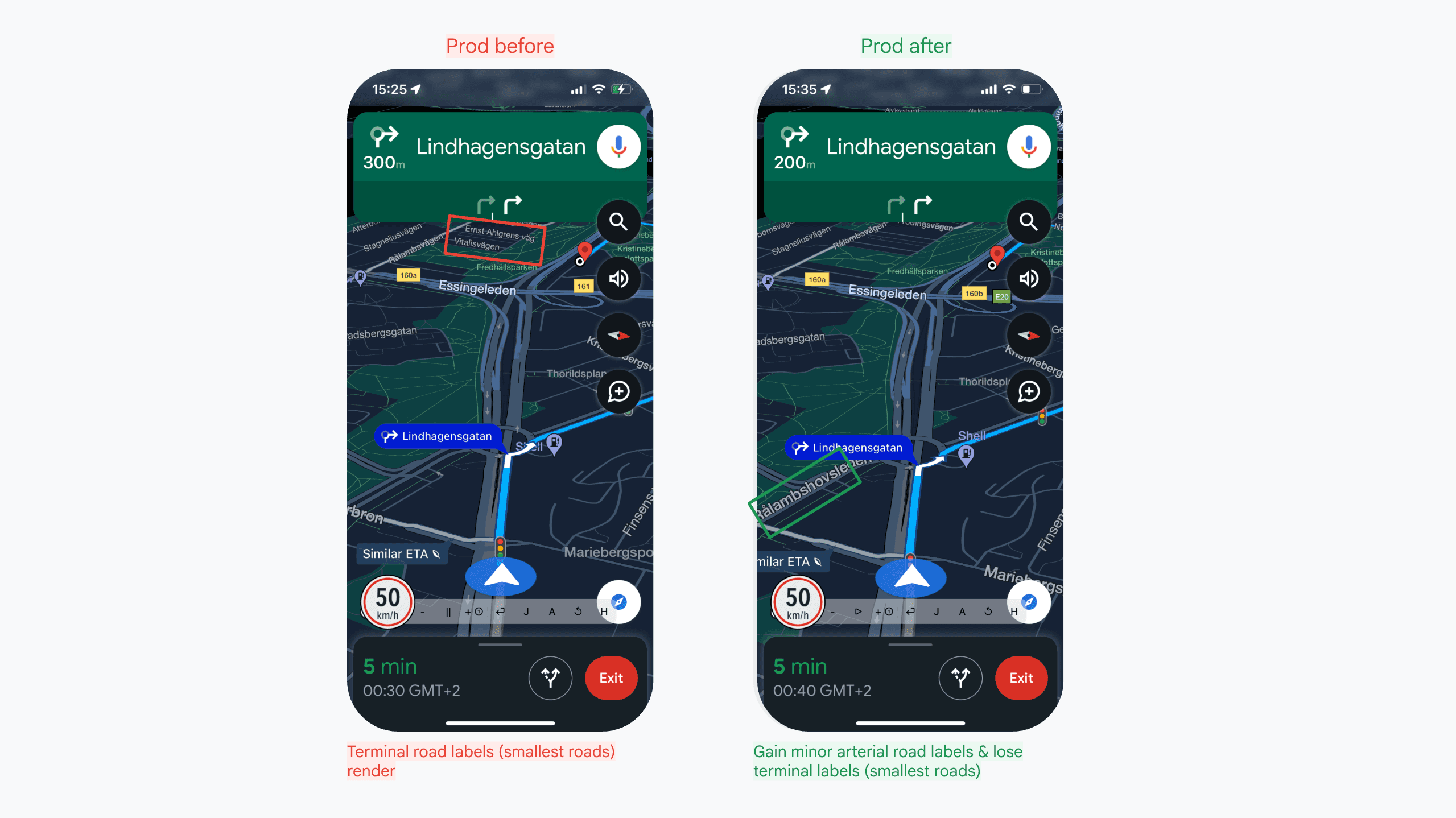
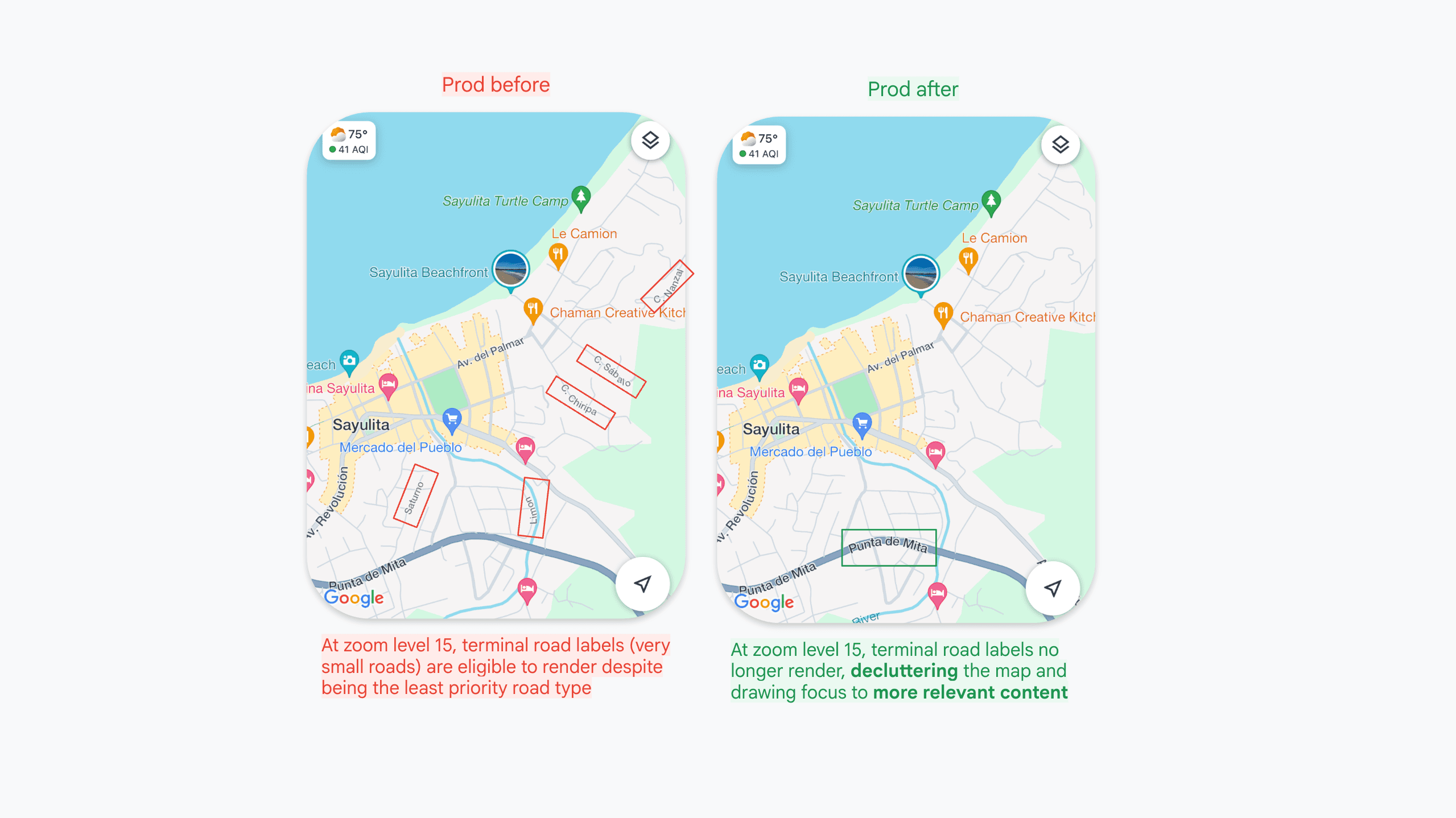
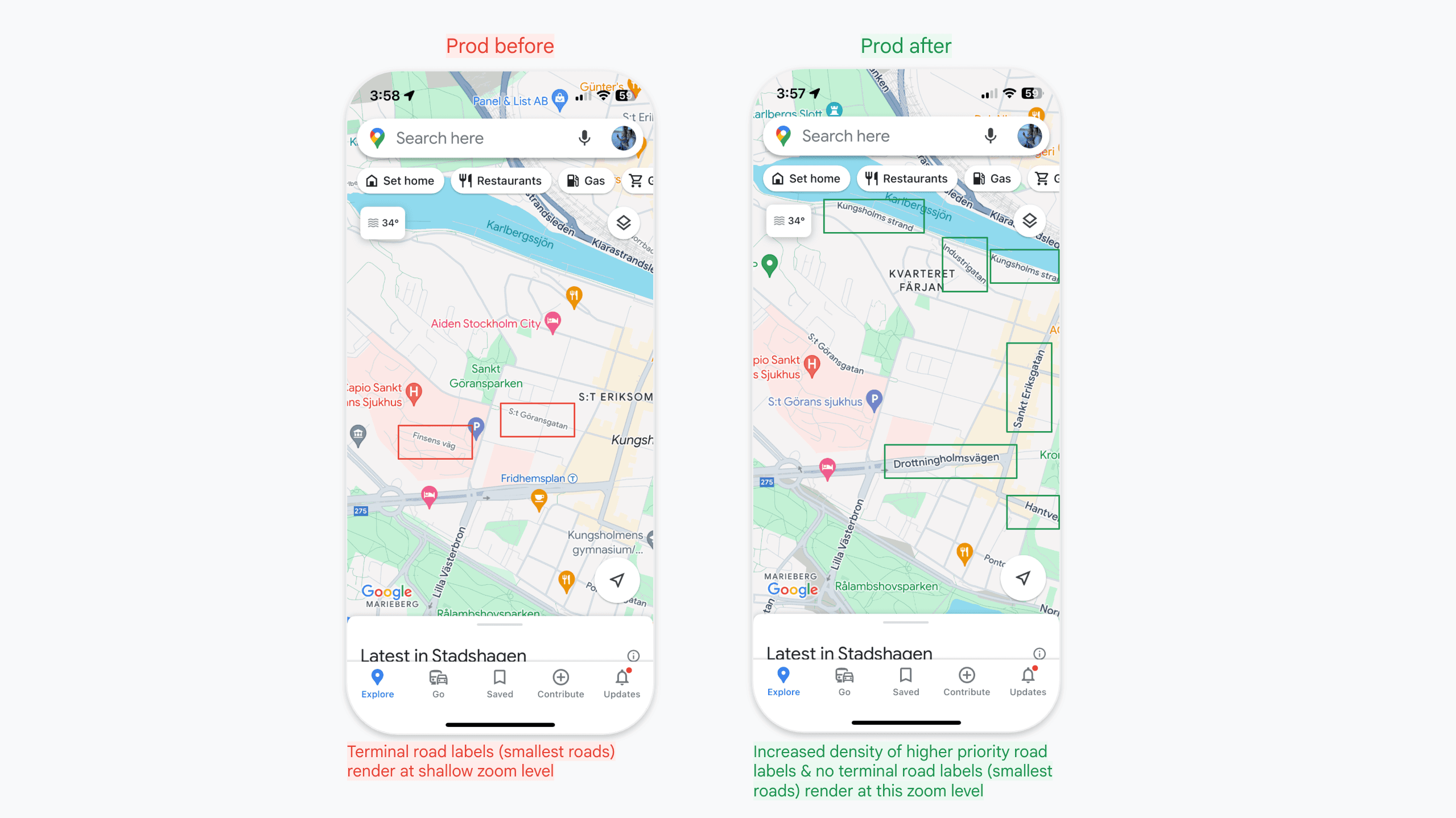
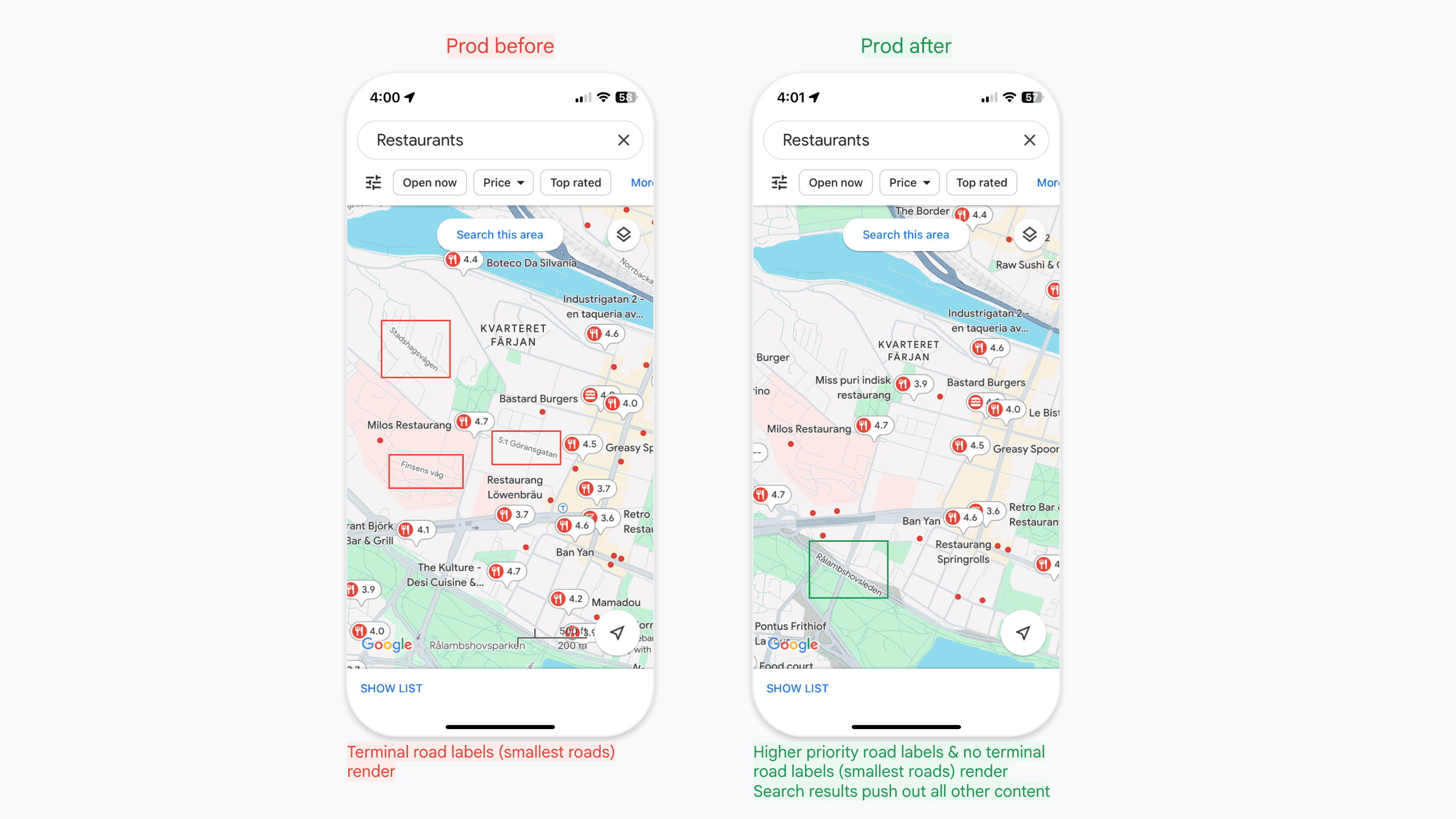
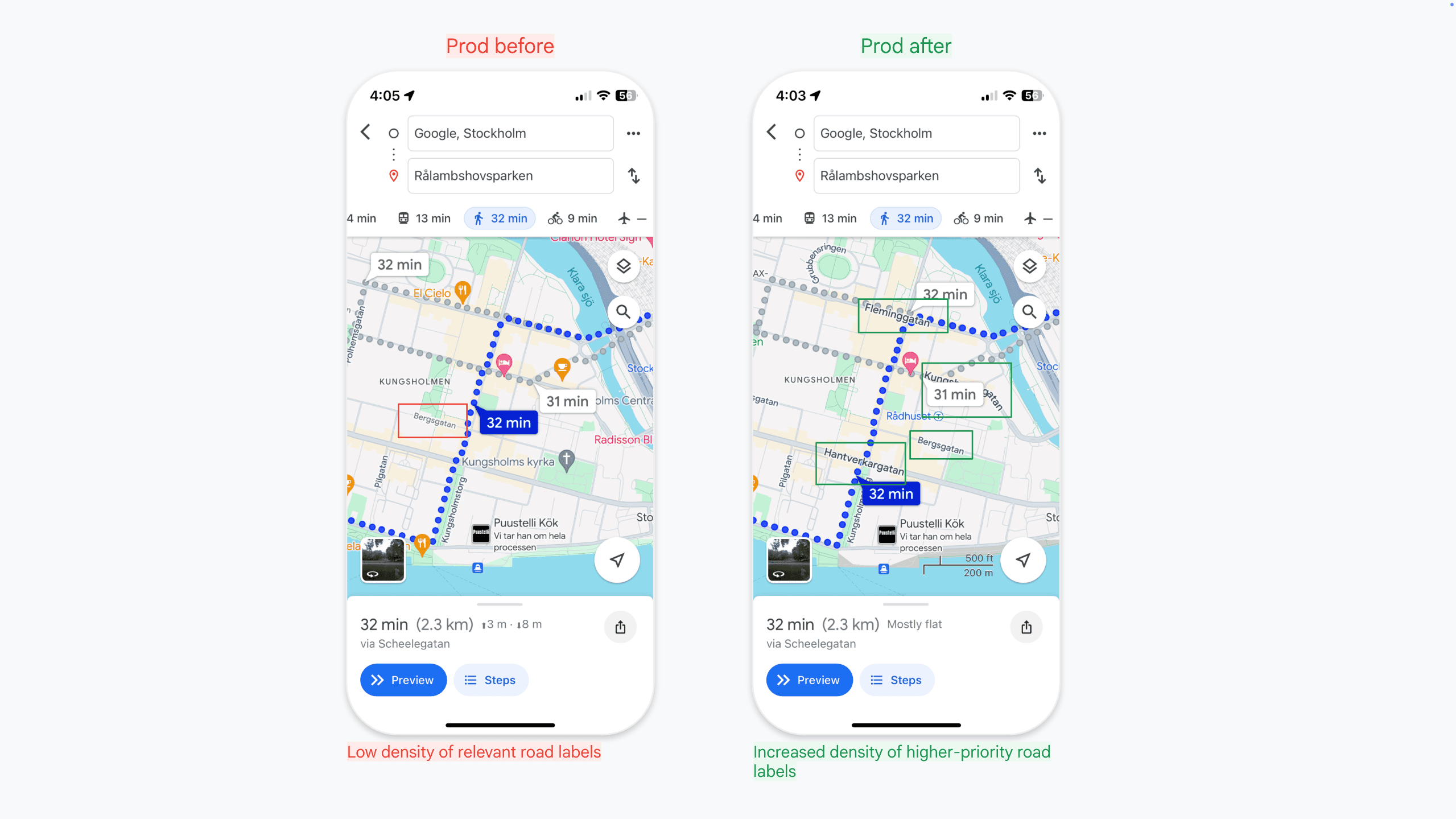
The new road labels IA impacts all map surfaces across Google Maps. The green boxes indicate net new road labels gained from the launch of this IA and the red boxes indicate the losses.
All Surfaces
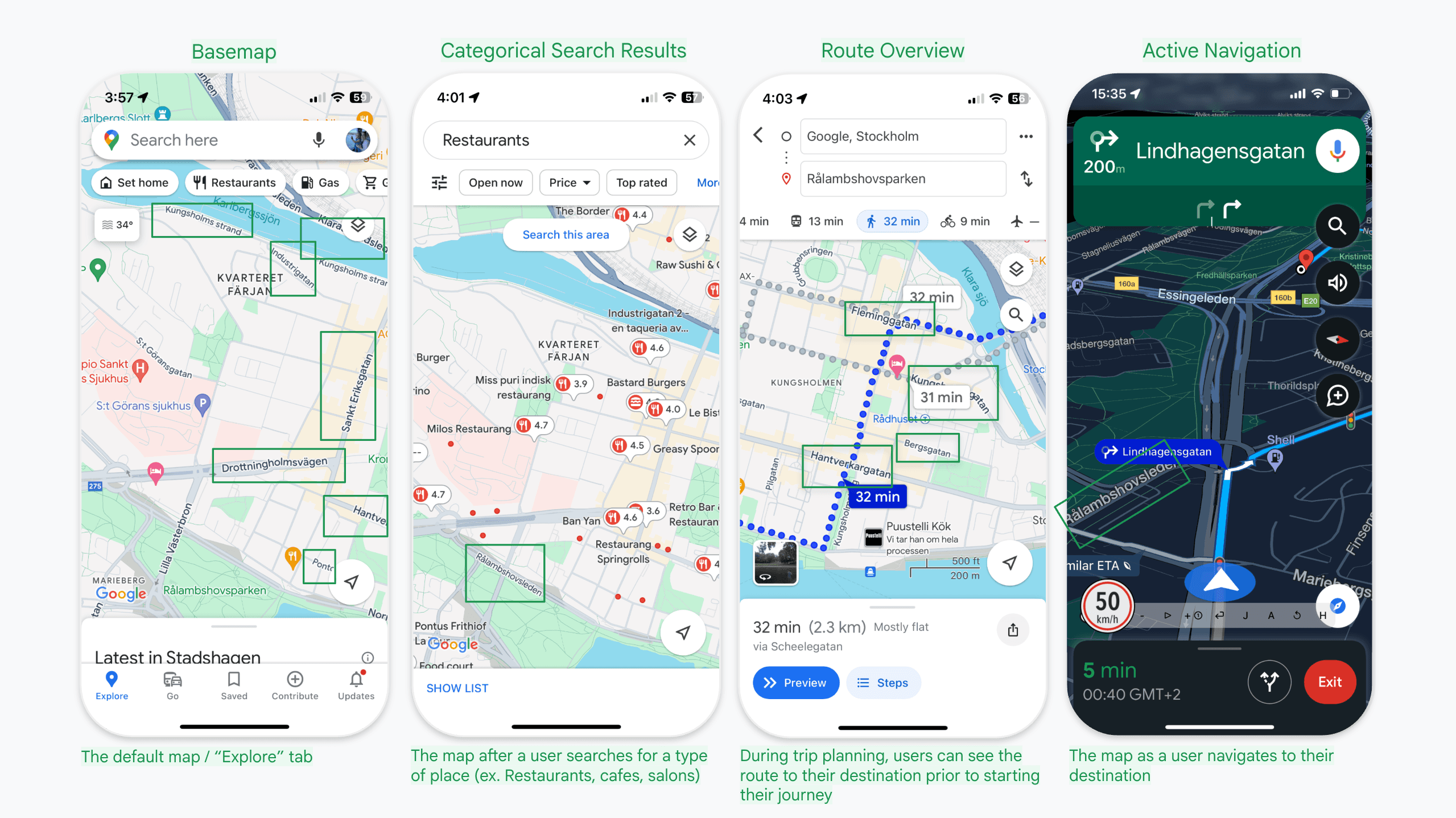
Basemap
The core map that users land on when they open Google Maps (Explore tab).
Search Map
The map state after a user searches for a category of a place (ex. salon, burgers, coffee, library).
Directions Overview
Before users start their trip, they can view their route on the directions overview surface.
Active Navigation
This is the surface users see as they are navigating to their destination.